
 Adult mental health services are a valuable part of a person’s overall health strategy. Whether you are currently experiencing symptoms of anxiety, depression, or other mental health conditions, or if you want help managing stress from work and relationships, mental health support can be invaluable. However, you may have found that these services are not always easy to access.
While geographic location and mental health niche matter when looking at the availability of therapists and other practitioners in your area, accessibility challenges often go deeper. Do not give up! By understanding the underlying barriers to adult mental health services, you can learn how to overcome them and get the help you deserve to live your best life.
Key Takeaways
- Mental health challenges affect as many as one in five people in the United States, but nearly half of these adults do not seek any treatment.
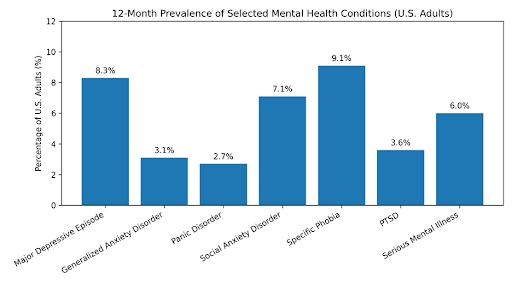
- Anxiety and depression make up the largest portion of mental health difficulties, but a broad range of diagnoses and symptoms prompt treatment in the people who seek therapy.
- Numerous barriers exist that can make seeking help difficult for some people: cost, stigma, lack of providers, transportation, and even scheduling conflicts.
- Mental health professionals can help patients overcome these barriers through options such as telehealth visits, referrals to community mental health services, and sliding-scale clinics to address financial concerns.
- If you need mental health help, you are not alone, and a therapist can help you understand your options based on your unique situation.
The Importance of Adult Mental Health Services
Statistics consistently show that mental health struggles are common all over the world. Around one in seven people live with a mental health disorder according to the World Health Organization, and in the United States, that number is about 23% (or one in five). Of these, around 50% never receive treatment.
The following graph briefly summarizes the overarching challenges that are most common across the US population:
The good news is that studies indicate that treatment is consistently effective in managing symptoms. Cognitive behavioral therapy (CBT) shows response rates of 40% or more for depression, and it can be combined with other approaches. Early intervention increases the efficacy of some types of mental health treatment in terms of timeline, but it is never too late to reach out for help!
The Most Common Barriers to Accessing Adult Mental Health Services
If you are considering seeking mental health treatment, you may have already encountered hurdles along the way. For many people, barriers make mental healthcare more challenging. While these difficulties are often specific to a person’s situation, geographic location, and other factors, a few remain consistent across the population. They include:
Cost
Mental health services are rarely free. Like a visit to a doctor, patients typically pay a copay tied to their insurance, and some find that their insurance policy does not cover mental healthcare at all. In this situation, patients must pay out of pocket. As a result, those seeking adult mental health services may give up entirely, or if they do continue with treatment, they may not attend as often as recommended due to financial concerns.
Therapists are sensitive to this issue and want their patients to succeed. If finances are preventing you from seeking treatment, speak with your therapist. They may be able to direct you toward financing options or local support programs to make treatment more accessible.
Stigma
 Another reason why many patients end up skipping therapy, even if they want it, is stigma. Some people have been exposed to negative opinions about therapy: that it is only for “broken” people, that patients are weak for needing it, and so on. They may worry that people’s opinions of them might change if they found out.
Rest assured that therapy can be helpful for anyone! You are not broken, and your commitment to seeking treatment is a demonstration of strength in adversity, not weakness. If you are concerned about how the people around you may respond, consider working with your therapist to establish tele visits or other options that protect your privacy in a manner you are comfortable with.
Lack of providers
In some regions, therapists simply do not exist in great numbers. If you live in a rural area or a place underserved by mental health professionals, you might face access challenges because you do not have enough providers to choose from, you cannot find one at all, or the wait list for appointments is too long due to high demand that outpaces the availability of local therapists.
Transportation
Even if you have plenty of therapists to choose from, you might find that seeking treatment is a hurdle if you cannot access transportation to get there. Not everyone owns a vehicle or can freely use public transit services, and offices might not be within walking distance. The prevalence of transportation-based barriers depends on factors ranging from the overall income level of the area to its logistical layout, the quality of its transit services, and more.
Scheduling conflicts
Busy people might need therapy just as often as those with open schedules, but they have less time in which to seek it. For some people, scheduling conflicts pose the greatest challenge to seeking adult mental health services. Perhaps they cannot get out of work during the day, and offices are closed by the time they are free. Maybe they work a job with unpredictable or flex hours and cannot predict from one week to the next when they are available for an appointment. These considerations should be discussed with a therapist so you can work together to create a plan that fits your schedule.
How to Overcome Barriers to Mental Health Treatment
The process of seeking mental health care might be more challenging than many people realize. The good news is that just as there are many potential difficulties in seeking treatment, there are also plenty of solutions. If you have encountered any of the accessibility concerns mentioned above, do not lose hope; mental health professionals care about helping their patients access the services they need, and they may offer options that broaden accessibility if you share your struggle.
Some of the barrier-breaking strategies you might encounter when troubleshooting accessibility problems include:
Sliding-scale clinics
For those whose primary issue is the cost of treatment, sliding-scale clinics can help you approach treatment costs from an entirely different angle. Considered safety-net providers, these offices adjust their prices based on the patient’s ability to pay. Thus, someone struggling with income near the poverty line will not pay as much as someone with strong health insurance coverage from a dual-income household.
In order to qualify for sliding-scale treatment, patients typically need to provide proof of their income. This proof might include pay stubs from the last 30 days, a W2 or 1040, documentation of Social Security or unemployment earnings, and/or state eligibility notices for programs such as SNAP. If you have been denied Medicaid, bring that information as well.
From there, the office can help you understand your options and the costs you can expect. You may even present this information to get a quote before you schedule your first appointment, so you are never taken by surprise by the bill.
Virtual therapy platforms
Thanks to advances in modern technology, more patients than ever are gaining access to therapy services through virtual platforms. Virtual visits (usually called televisits or telehealth treatment) can help overcome many of the barriers mentioned above: lack of transportation, concerns about stigma, scheduling conflicts, and more. In addition, telehealth therapy can broaden your network of providers, allowing you to seek one from anywhere in the state who has the skills related to your specific needs.
Virtual therapy commonly takes place via a video chat service such as Zoom. Some providers offer phone-based therapy, but in general, practitioners prefer to see a patient’s face. This is one part of the treatment approach, as both the patient and the therapist can respond to each other’s body language to facilitate clearer and more productive discussions. However, speak to your therapist to discuss any issues, such as availability barriers for cameras and computers, to find an option that works for you.
Community mental health resources
 Not all therapy has to be done in a therapist’s office. Many community-based resources exist, such as hotlines or even local health departments that offer urgent services. If private care is unavailable, community resources can help to bridge gaps in care, offer peer support, and even point participants toward related services, such as housing assistance, that may alleviate some of the contextual challenges they are facing that are contributing to their mental health struggles. Non-profits and community mental health centers are two examples of services that fit this category.
Get the Mental Healthcare You Need
If you have sought mental health treatment before and discovered that participation is more complicated than you expected, you are not alone. Adults often encounter systemic and personal hurdles to care, and no two situations are alike. The good news is that you can gain the knowledge and tools necessary to take the next step toward prioritizing your mental well-being. Contact Aquila Recovery Clinic to schedule an appointment and learn how we can help you access the mental health services you deserve, even if some of the barriers mentioned above are making the process more challenging for you.