
 Adult mental health services are seeing more participation than ever, and therapists love to see it. One of the main reasons why therapy is growing in popularity is that mental health services are evolving to meet the new needs of the modern era. From increasing access using technology to adjusting what happens during the appointment itself, therapists are able to help more patients than ever.
If you are considering trying therapy, there is no better time than now. Treatments are now available that can meet your specific needs based on factors ranging from time availability to areas of focus and the factors that make your situation unique. Here is an overview of the current mental health environment and how it might influence your decisions about your therapy goals.
Key Takeaways
The number of adults using mental health services has been growing. Previously, teenagers were the most likely to attend therapy. However, middle-aged adults have brought the numbers up to nearly equal levels.
Mental health services are evolving to meet current needs by incorporating telehealth, increasing access in communities, offering group therapy to decrease wait times, and making active efforts to reduce the stigma surrounding mental healthcare.
Those looking for the best mental health service provider should consider a therapist’s areas of focus, the accessibility of appointments, what they need to participate consistently, and the goals they can set for themselves.
How Many Adults Use Mental Health Services?
Historically, mental health has been concentrated in younger populations. However, more adults of all ages have been committing to therapy in recent years. Studies indicate that the percentage of participants ages 26 to 49 has risen to nearly equal that of their teenage peers.
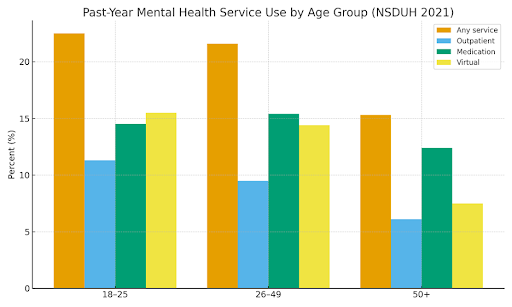 However, participation continues to drop off over time, and therapists are working to reverse this trend. Through a combination of digital developments, changes to the initial appointment, greater community outreach, and other strategies, adults are increasingly exposed to impactful mental health services they can access.
How Adult Mental Health Services Are Evolving to Meet New Needs
In the past, therapy was primarily limited to in-person appointments in physical offices, and while this remains standard, more options now exist. In addition, what happens inside that physical or virtual office has changed, and people might choose different therapy options than they did in the past. Some of the many ways that modern therapy reflects an evolving environment include:
The rise of technology
Now more than ever, technology has made therapy more accessible to people who may otherwise not have participated at all. Logistical concerns have been substantially mitigated by online therapy. For instance, in the past, various factors limited access to therapy: time constraints, the inability to leave work for an appointment, difficulties arranging childcare, or even physical challenges getting to the office (e.g., no car, mobility considerations). Online therapy has now removed these and other obstacles that traditionally prevented people from receiving much-needed care.
Also called digital therapeutics, remote therapy allows you to reap the benefits of traditional approaches without needing to travel. Some digital therapeutics are tools or resources that patients can use to accomplish therapy goals (such as stress management) outside of appointment times. Others provide a video connection during therapy sessions so participants can continue to see their therapist face to face, which studies indicate can result in superior mental health recovery compared to solely text-based treatment.
Increasing access to out-of-office assessments
Prominent psychologists and psychiatrists in the field of mental health have increasingly converged on the value of assessments, creating Helping Give Away Psychological Science (HGAPS). This non-profit aims to make basic mental health assessments more accessible to patients without requiring an appointment.
While an assessment cannot directly diagnose mental health challenges such as depression or bipolar disorder, patients who take these assessments and see the results are more likely to follow up for therapy. Services are evolving to put more agency and knowledge into the hands of patients, equipping them with the information they need to find the right therapist and set relevant goals.
The one-stop model
One of the biggest roadblocks in mental health services for adults in years past has been consistency. Studies indicate that anywhere from 15% to 60% of participants do not attend any therapy appointment after their first (depending on how “dropout” is defined). Previously, therapists would try to combat this by creating a long-term strategy and convincing participants of the value of continued treatment.
Now, in addition to these important steps, therapists are able to create highly impactful, single-session plans. These can equip participants with the knowledge to proceed on their own mental health plan with more confidence, which may then contribute to both an overall increase in quality of life and a greater likelihood that they will return for more substantive, long-term collaboration.
This evolution focuses more on understanding patients’ needs in the existing cultural, social, and employment climate to meet them where they are.
Choosing group over individual therapy
Wait lists have long been a challenge for mental health services, and many people give up on the process after becoming discouraged or disillusioned by the waiting time for a single appointment. In order to combat this trend, mental health practitioners have evolved to provide more accessible services. One way to do this is by utilizing group therapy.
Some people are willing or even prefer to participate in therapy with a group. Group therapy does not compromise on quality, and those who participate are statistically equally successful as individually attending peers in learning new skills and managing their mental health symptoms. Groups can provide a sense of safety and community not found in individual settings, all while reducing the wait list for therapy services.
A focus on reducing stigma
 Historically, seeking mental health services has come with some level of cultural or social stigma. Therapy may be tied to feelings of inadequacy, failure, or “wrongness.” However, this is far from true; therapy is a valuable partner for many situations, from understanding a difficult emotional concept to building strong habits and consistency that can benefit your daily routines.
As a result, mental health services are evolving to combat this stigma and clarify the role that therapy can serve. This includes performing community outreach and meeting with patients where they are to keep them comfortable and feeling welcome. Offices may now be more vocal about being LGBTQ+ friendly, focused on specific goals and challenges, and more.
Personalizing treatment plans
There is no one-size-fits-all solution to the many elements that shape a person’s mental health. Mental wellness services are adapting to offer more personalized treatment than ever before, thanks to a combination of new tools and unique strategies that have arisen in recent years.
If you attend therapy, you can expect your therapist to make recommendations based on your specific needs and goals. For instance, journaling is a common suggestion for many participants, but if journaling is not the right fit for you, your therapist can use your own hobbies, interests, and skills to develop an alternative that serves you.
How to Find a Mental Health Service That Serves You
Are you considering trying therapy for yourself? There is no better time than the present to start! However, choosing the right partner is an essential step in the process. Some of the things that can help you find a good fit are:
Choose a relevant provider
You should not simply choose the first therapist that shows up in your search. Each therapist has specific areas of interest and experience; some may work primarily with depression and anxiety, while others focus on emotional regulation, burnout, and more. Review the information of anyone you are considering to see if they match your goals and challenges.
Have a goal
Speaking of goals, it is useful to have one! You do not need to know any diagnoses or solutions to your current struggles; simply consider what you would like to accomplish. Do you want to feel more confident in certain situations? Be angry less often? Improve your work-life balance? All of these are entirely viable goals to bring to a therapist, and they can help get your collaboration off to a solid start.
Consider access
One of the most important facets of therapy is that you attend. You know yourself best; select a therapy provider with whom you are most likely to stay consistent. If that means someone who offers telehealth so you can manage your visit from home, then include that in your must-haves during your search. If the therapist is located in a physical office, how easy is it to get there? If you have mobility limitations, is the building accessible?
Embrace Mental Health Services That Can Keep Up With Your Life
 If you are considering the role that adult mental health services could play in helping you develop as a person, there is no better time than the present to try therapy. Thanks to evolutions that make mental healthcare more personalized and accessible than ever, you can find professionals who are well-equipped to address the challenges you are encountering.
Whether you think that individual or group therapy may be the right choice for you, be sure to select a team you can trust. The professionals at Aquila Recovery clinic are LGBTQ+ friendly therapists with years of experience in difficulties ranging from anxiety and depression to dysphoria and a lack of support systems. Contact Aquila Recovery Clinic to sign up for your first therapy appointment!