
 Washington, D.C., can be an empowering place to live, thanks to its exposure to diversity and its wide-reaching opportunities for employment, education, and more. However, when it comes to metrics such as its residents being overworked, no city scores higher than D.C. Stress, anxiety, and frequent life transitions are just some of the challenges residents face, and those who take advantage of individual therapy in D.C. can achieve improved mental wellness outcomes compared to those who try to tough it alone.
If you have never tried therapy before, there is no better time to start! Therapy can target many challenges, from stress and anxiety to the feelings of being overwhelmed and hopeless that may come with transitioning to a new stage or role in life. Here are the basics you should know as you consider the next step in your mental health journey.
Key Takeaways
- Washington, D.C., can be a stressful and intense place to live, reflected in its high proportion of people in therapy and stress levels higher than the national average.
- Individual therapy can help to address anxiety and overwhelm by teaching new skills, such as coping mechanisms that function both in the office and at home.
- Navigating life transitions can be easier with therapy, which helps identify a person’s core values and goals while providing a stable place to explore them.
- Coping strategies, such as boundary setting, are best practiced in therapy to develop long-term, healthy solutions rather than short-term, potentially harmful ones.
- Therapy helps a person develop greater awareness of the difference between productive pressure and unhealthy stress that leads to burnout.
- People who participate in therapy learn to create balance across work and personal life, time alone and in relationships, and more.
- Those who are unsure whether therapy may be a good fit for them should consider the persistence of their symptoms, how often they are overwhelmed, whether they experience decision paralysis, or if they feel disconnected from their lives.
- You do not need a tangible reason to attend therapy. Simply wanting to talk or desiring self-improvement for no particular issue can be a great place to start. Individuals who proactively use therapy to develop the tools necessary for emotional well-being may find themselves better prepared to handle the challenges and obstacles inherent to life in D.C.
Washington, D.C.: An Intense Place to Call Home
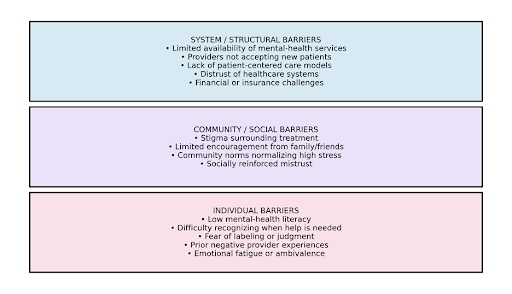
With its “always on” mentality, living and working in Washington, D.C. comes with its fair share of stressors. Nearly half of D.C. residents show symptoms of anxiety or depression (43.7%); despite this, many people choose not to try therapy because they do not understand its purpose, fear potential stigma about it, and more.
Studies indicate that there are many reasons why people who would benefit from therapy still have not sought it:
Why Individual Therapy Helps
D.C.’s pace and professional culture can create chronic pressure, and the city’s achievement mindset can make stress and anxiety feel normal. Visiting a professional offers a dedicated space to think and process outside of the demands you may normally face in the city. There is no judgment or pressure to perform; rather, the therapist is present to teach and help participants develop their own skills, which can serve them outside the office.
Seeking individual therapy can help you live the life you want to live by:
Addressing anxiety and overwhelm
Anxiety is among the most common reasons why someone might choose to visit a therapist. In therapy, you can collaborate to learn grounding and cognitive techniques to help you control your emotions. The goal is not to deaden your feelings or make them disappear, but to help you spot them, name them, and decide how much control they have over your thoughts and actions.
Addressing anxiety in this way helps you to recognize the physical signs of stress, which in turn decreases your chances of burnout. Equipped with this knowledge, you can reframe your thinking and stop spirals before they happen.
Navigating life transitions
Because D.C. is home to a little bit of everything, residents often find themselves in periods of change: new jobs, promotions, academic shifts, relationship changes, moves, and more. Therapy is a structured setting where you can count on things staying predictable. This is invaluable for mental health and offers opportunities to work with the therapist on confidence.
You can make sense of your life’s changes in the therapy office, building confidence in your decision-making skills and spending time on contemplating an important question: what matters to you? Patients who dedicate thought to their life’s values can make decisions that serve them, reducing the stress caused by poor fits (in work, relationships, and so on).
Building healthier coping strategies
Everyone will be placed into stressful or challenging situations from time to time, and the ability to cope is essential for making forward progress. Therapy helps participants to transition from short-term (and potentially harmful) coping methods to long-term habits that are sustainable and healthy.
A therapist can also help you create the boundaries you need to succeed. This might mean placing hard rules on the separation between your work life and your time at home, or identifying where high-intensity matters are creeping into your relaxation time.
Enhancing self-awareness
For many people, therapy is eye-opening because it identifies issues that they either did not notice at all or could not put their finger on. Therapy helps clarify what is driving stress and anxiety. Everyone gets anxious sometimes, but it is not a mandatory part of living in D.C.
A therapist can help you distinguish between productive pressure, which spurs you toward great accomplishments (personal, relational, or professional), and unhealthy overload, which can burn you out and negatively impact your health.
As an added benefit, those who invest time in therapy often develop a deeper understanding of their own strengths, personal needs, and the patterns that influence their decisions. As a result, they can preempt potentially problematic situations and make minute adjustments daily to keep their life on the track they have set for themselves.
Creating a sense of balance
 There is a difference between reactive rest (resting only when forced to) and intentional recovery time built into the day. Therapy helps you learn to align your daily choices with your long-term well-being, finding places of rest and enrichment without compromising on your important responsibilities. This helps you maintain inspired energy, think more clearly, and develop healthier relationships.
When to Consider Therapy
If therapy sounds like it could be useful for you (or if you are still unsure), it can be helpful to know which symptoms indicate a potential issue. You do not have to be encountering any particular challenges to attend therapy; many people find it beneficial to cultivate new skills or get ahead of life’s problems before they arise. However, once stressors have already developed, it is not too late to try therapy!
If you are experiencing any of the following, it may be time to consider whether therapy could make your life more regulated and enjoyable:
Persistent symptoms
As mentioned previously, occasional spikes in stress (e.g., before a big presentation or meeting a date for the first time) are normal. However, if you are consistently anxious with no reprieve, or if you are experiencing physical symptoms of stress that impact the quality of your life, therapy may be a good next step.
The role of being overwhelmed
Being overwhelmed often occurs when you do not believe that you have the skills or knowledge to overcome the stressor. If you are high-functioning and ready to overcome the challenge but feel overwhelmed anyway, you may be on your way to burnout. This is an ideal time to visit a therapist.
Decision-making proficiency
Decision paralysis is real; sometimes, there is no clear winner among choices, or you may have to choose the lesser of two (or more) evils. However, if you find yourself struggling to make decisions frequently, regardless of context, because you fear the potential outcome or cannot stop thinking about it, you may be able to regain mental stability and wellness through individual therapy.
Disconnection
Setting personal goals is an invaluable part of thriving in life. It can keep you inspired, excited, and fulfilled. But if you feel disconnected from goals, pastimes, or activities that previously enriched you, or if your life seems like it is stagnating, individual therapy may be able to help.
A desire for improvement
 Sometimes, you may not be in the midst of any particular challenge or stressor that drives you to seek help. Rather, you may simply want to improve yourself: your coping skills, emotional resilience, or something else. By developing these abilities in advance through therapy, you can equip yourself with the tools necessary to tackle oncoming challenges without being derailed from your goals and wellness.
Overcome Stress, Anxiety, and More with Individual Therapy in D.C.
Individual therapy in D.C. is popular for a reason: it provides the support that busy working professionals, students, and families need in order to remain mentally well, secure, and confident in their approach to life. Whether you are currently facing stress, anxiety, depression, or a major transition that is complicating your life, the professionals at Aquila Recovery Clinic can help!
Of course, we also welcome anyone who simply wants to see what therapy is about and how having a reliable, judgment-free place to talk can help. You do not need to have goals or answers before you come! Contact Aquila Recovery Clinic to schedule an individual therapy appointment and see how living in D.C. can become much less of a stressor after all.