
 Adults with responsibilities spanning employment, family, finances, and more already have a lot on their plates. For many, mental health considerations fall by the wayside in favor of these seemingly more pressing concerns. However, prioritizing mental health is essential for adults of all ages, and failing to do so can have significant consequences in areas of your life you may not have expected. Adult mental health services can change the way you approach your life on a daily basis.
From providing new coping skills to helping you create a plan for achieving your long-term goals, therapy and other mental health services play valuable roles. The following is a big-picture overview of why prioritizing your mental health can change your life, regardless of your age.
Key Takeaways
- Mental health in the US remains a struggle for many people. About a quarter of all US adults experience some sort of negative mental health symptom.
- Anxiety and depression are the most common, but many other diagnoses are present.
- Mental health is tied to physical health, leading to an increased risk of heart attack, stroke, diabetes, and more.
- More than a trillion dollars is lost each year due to decreased productivity from burnout and mental health conditions.
- A person is, on average, two to three times more likely to make mistakes or be injured at work if they concurrently suffer from mental health difficulties.
- Stigma, accessibility, and poor therapist fit can impact whether an adult is willing or able to seek mental health care.
Adult Mental Health: The Facts
Mental wellness challenges remain one of the most pressing health concerns in the United States. Among adults, approximately 23.4% (or more than 61 million people) have experienced a mental health struggle within the last year. By the age of 24, about 75% of people will already be showing signs of the long-term mental wellness challenges that they are likely to face throughout adulthood, but this does not mean that an individual cannot develop new symptoms or make new discoveries about their mental state at a later time in adulthood. This is why seeking treatment regardless of your age has the biggest impact.
While about a quarter of adults who experience unwanted mental health symptoms seek treatment, the remaining majority do not engage with medication, therapy, or both. Research indicates that more treatment is sought for anxiety disorders than any other category, but among US adults, the annual prevalence of mental health conditions varies greatly:
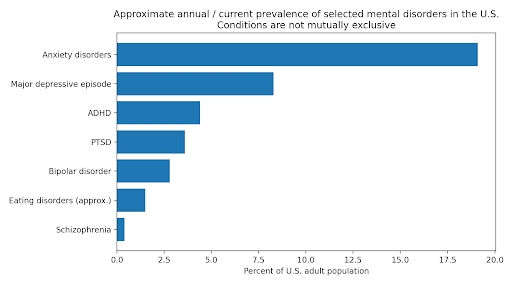
Even among adults without a formal diagnosis, symptoms often continue for many years without treatment. Some of the most common symptoms that adults live with each year include:
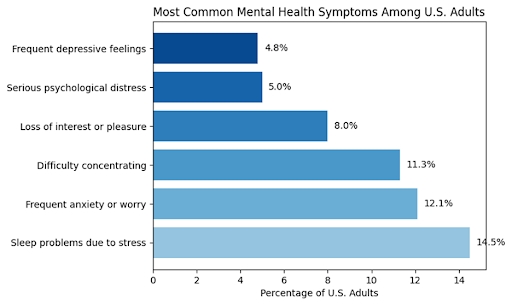
The good news is that you do not have to live with these symptoms (or others). By prioritizing mental health, regardless of your age, you can develop new skills and thought patterns that improve your quality of life and reduce the negative effects of such challenges on your daily well-being.
The Intrinsic Link Between Mental and Physical Health
Many people operate under the mistaken idea that mental health symptoms exist in isolation. If they can cope with being slightly irritable or anxious every day, then that part of their life is contained, and no treatment is needed.
However, this could not be further from the truth. In reality, mental and physical health are intrinsically linked, and by neglecting your mental wellness, your body could be feeling the effects, as well.
The following health outcomes have been observed when studying mental wellness:
- Depression: a 60% increase in risk for diabetes and a 64% increased risk of coronary artery disease
- Anxiety: a 40% to 50% increase in cardiovascular disease, and twice the risk of heart attack or stroke
- Any diagnosed serious mental illness (SMI): a lifespan 10 to 25 years shorter, on average, accounting for around 70% of premature deaths
These are just a few of the many correlations between how the body processes its mental state and the effects that processing can have on one’s physicality. Prioritizing mental health at any age can help reduce or eliminate adverse health conditions associated with such mental state changes.
Mental Health’s Impact on Performance, Productivity, and Quality of Life
 In addition to the physical effects of mental symptoms, a person is also likely to experience impacts on less tangible areas of their life. For example, their quality of life may decrease as they struggle to sleep, focus, or spend time with friends. Relationships may falter under the strain of poorly controlled emotions or depressive episodes that make it difficult to get out of bed. Cumulatively, even small symptoms can have lingering effects.
Furthermore, mental health developments may impact a person’s productivity and performance, both at work and within personal interests and projects. The World Health Organization notes that mental health conditions cost the economy approximately $1 trillion each year in lost productivity. Studies show that losses arise from multiple factors:
Absenteeism (or presenteeism)
Among those who call out sick from work or skip their favorite activities, those with mental health symptoms do so 4.8 additional days each year. In the workplace, this amounts to more than 12 billion lost workdays globally. However, even if a person is present and doing their scheduled activity, depression and similar conditions can lessen their productivity and efficiency, often by around 35%. Depression alone accounts for around $210 billion in economic burden each year from lost productivity alone, not including healthcare costs related to mental wellness treatment.
Anxiety can produce similar effects; working memory capacity is shown to decrease by around 25%, and people suffering from such consistent stress are 2.5 times more likely to experience burnout.
Burnout and turnover
When it comes to burnout, those who are dealing with uncontrolled symptoms associated with their mental well-being are the most frequent victims. Burnout increases the rate of job loss by 40% to 50%, which means that untreated mental health conditions can result in even greater stress from struggling to maintain steady employment.
Safety and quality
When a person is not well-rested and comfortable, they are more likely to make mistakes. OSHA reports that workers experiencing psychological distress are two times more likely to create errors in their work, and their risk of being involved in a workplace accident rises by three times.
Taking care of your mental wellness is about more than just making more money at work or feeling better. It also keeps you safe!
Age Does Not Outpace Mental Wellness Challenges
As people approach their 30s, 40s, and beyond, it is easy to assume that they have learned to manage the hand they have been dealt. However, mental health continues to change over time, as does your resilience to the symptoms it brings. It is never too late to invest in treatment, as each stage often comes with challenges that can spur new mental developments or aggravate challenges that were previously lying low.
- Early adulthood: Career uncertainty, financial pressure, and the formation of your identity as a person take center stage, leading to a proclivity toward anxious thoughts and similar symptoms. Cognitive behavioral therapy can be invaluable here for addressing problematic thought patterns before they become ingrained.
- Midlife: Can be full of caregiving responsibilities, burnout, relationship strain, and a sense of losing oneself. Solution-focused therapy is often successful here.
- Later adulthood: Frequently transitions into grief, isolation, health changes, and loss of independence. Mindfulness-based therapy can help alleviate the sense of loss and restore hope and enthusiasm.
All of these events lead to a constantly evolving mental health landscape. You will never outpace your mind’s changes, so it is better to learn about them and how to be whole with them.
The Barriers to Mental Health Support for Adults
If you are considering mental health care at any age, the next best step is identifying a therapist you would like to try. However, many people unfortunately face hurdles when seeking healthcare.
Stigma
One of the biggest challenges unique to mental healthcare is the stigma surrounding it. While this idea has decreased in recent years, many people (especially older adults) still carry the idea that you go to therapy when something is “wrong” or if you are “broken.” Neither of these is true. Seeking mental health assistance is a wise, courageous choice that shows you are investing in your long-term health. You do not need to be experiencing symptoms at all; therapists can still give you powerful tools to cope, learn, and grow.
Accessibility
Some areas, especially in rural areas, may not have easy access to a plethora of therapists to choose from. The good news is that many offices now offer telehealth appointments, making accessibility challenges less of a concern than ever before. More insurance plans are also folding mental health services into their coverage, too.
Fit
 When you select a therapist, it is important to consider their areas of focus. For example, if you would like to learn coping skills to address burnout, you may not be best served by a therapist who works primarily in childhood trauma therapy. Review the details of any therapist you are considering to see if their areas of practice overlap with your interests and goals. This encourages a stronger, more effective collaboration.
Choose Mental Health Care That Meets You Where You Are
Whether you are 20 or 70 years old, now is a great time to invest in your own mental wellness. For the sake of your physical health as well as your quality of life, consider trying individual therapy to see the difference it can make. Contact Aquila Recovery Clinic to schedule an appointment, meet your therapist, and discuss goals, pain points, or questions so you can look forward to a life that is exciting and enriching.